Rosacea
Rosacea is a chronic, inflammatory skin condition characterised by persistent facial redness, visible blood vessels, flushing, and in more advanced cases, inflammatory pustules and skin thickening that can profoundly affect the appearance and comfort of the skin. Most commonly affecting the cheeks, nose, chin, and forehead, rosacea is a complex and multifactorial condition that tends to follow a relapsing and remitting course — cycling through periods of relative calm and frustrating flare-ups triggered by a wide range of environmental, dietary, and lifestyle factors. While entirely manageable with the right clinical approach, rosacea is a chronic condition that requires ongoing, expert management rather than a one-time fix and the earlier treatment is initiated, the more effectively its progression can be controlled.
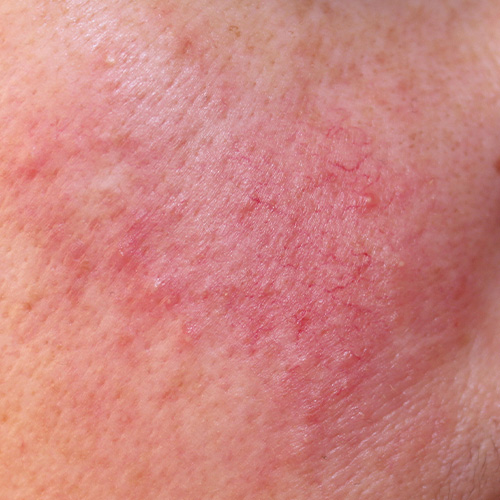
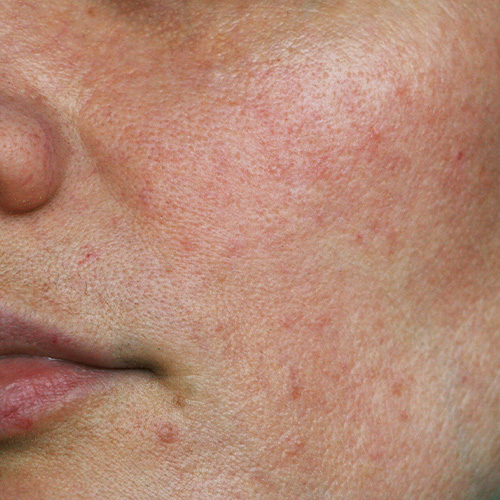
Rosacea is a chronic inflammatory disorder involving oil-gland abnormality and capillary reactivity.
It can cause persistent central-face redness, papules, pustules and widened vessels.
Triggers include sun, heat, stress, alcohol, spicy foods and irritating cosmetics.
There are four distinct subtypes of rosacea: erythematotelangiectatic rosacea (redness and visible vessels), papulopustular rosacea (inflammatory acne-like breakouts), phymatous rosacea (skin thickening, most commonly affecting the nose), and ocular rosacea (affecting the eyes and eyelids)
Rosacea is most common in fair-skinned individuals particularly those of Celtic, Scandinavian, and Northern European descent, although it can affect people of all skin tones and ethnicities
Treating rosacea
Your SKIN expert will assess your skin and design a personalised plan at your complimentary consult.